
Wayne Schepens is a technology communications executive and founder of LaunchTech Communications, a firm specializing in public relations and marketing within the cybersecurity and emerging technology sectors. Drawing on experience that includes leading a cybersecurity software company and collaborating with organizations such as the Naval Surface Warfare Center and the US Military Academy, Wayne Schepens brings a practical understanding of how security technologies evolve and are communicated in competitive markets. Based in Severna Park, Maryland, he has guided startups and established firms in shaping effective go-to-market strategies. His background in engineering and systems thinking, combined with hands-on industry engagement, provides relevant context for examining how automation is transforming cybersecurity operations and helping organizations respond to increasingly complex digital threats.
The Role of Automation in Cybersecurity Operations
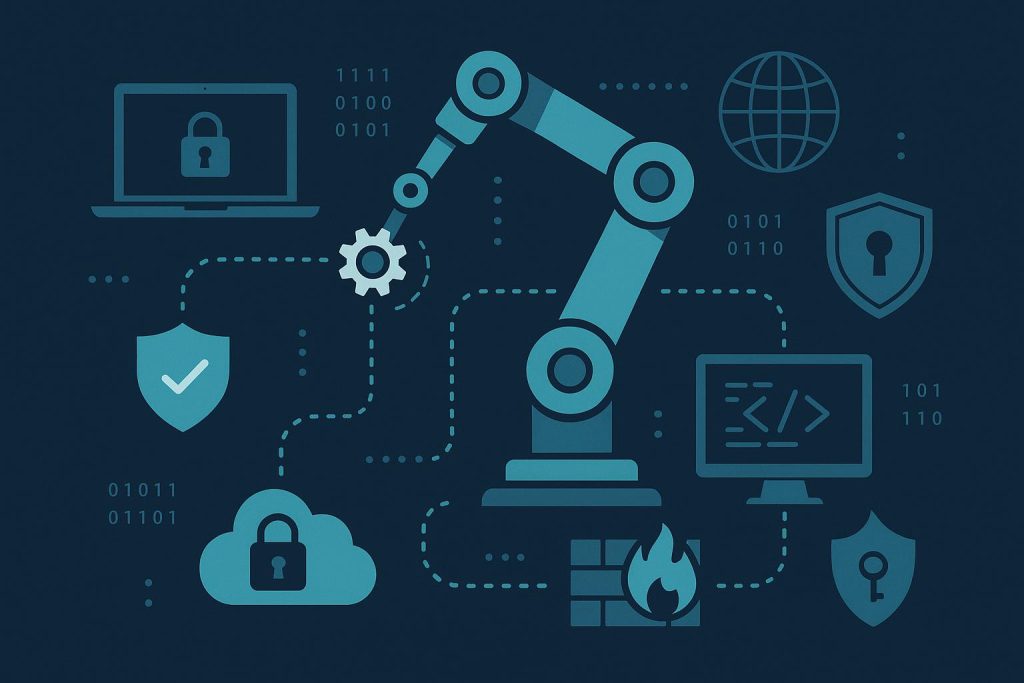
Automation is an important part of modern cybersecurity operations. As organizations face an increasing number of cyber threats, manual processes are insufficient to address them. The National Institute of Standards and Technology has noted that automation is very instrumental to building a resilient and adaptive security system.
Security teams must analyze large volumes of data, detect anomalies, and respond to incidents in real time. Integrating automation into cybersecurity workflows can help organizations to improve efficiency, reduce response time, and strengthen their overall security posture.
Cybersecurity automation involves using technology to perform security tasks with little to no human intervention. These tasks may include threat detection, vulnerability management, compliance monitoring, and incident response. Automation tools typically use predefined rules, artificial intelligence, and machine learning to identify risks and take action. Security Orchestration, Automation, and Response (SOAR) is an automation framework. The platform integrates various security tools and automates workflows, enabling organizations to respond to threats more quickly and consistently.
Additionally, automation helps improve threat detection and response. Traditional security systems might rely on human analysts to review alerts, leading to delays and missed threats. Automated systems filter and prioritize alerts based on relevance and severity. By handling routine tasks such as log analysis and event correlation, automated systems enable security professionals to focus on high-priority incidents. This eventually helps to reduce burnout among cybersecurity teams.
Next, automated workflows consistently report security incidents in accordance with established protocols. These workflows can include steps like threat analysis, data collection, remediation, and containment. For instance, after a phishing attack has been detected, an automated system can remove malicious emails from users’ inboxes. The system can also initiate a user awareness notification.
Automation allows organizations to continuously scan networks and applications for potential weaknesses without relying solely on manual checks. These tools can identify and prioritize risks by severity, helping security teams focus on the most critical issues first. In some cases, automation can even apply patches or adjust system configurations on its own, which reduces the time systems remain exposed to potential threats.
Moreover, automation also simplifies compliance and governance processes. Keeping up with regulatory requirements can be time-consuming, especially for organizations with complex systems. Automated tools help by continuously monitoring systems to ensure they follow established policies and standards. They can generate reports, track system changes, and confirm that security controls remain effective. By aligning with recognized frameworks such as those of the International Organization for Standardization, organizations can maintain compliance efficiently, reducing the risk of penalties.
Artificial intelligence and machine learning improve the impact of automation in cybersecurity. These technologies help systems analyze large amounts of data, recognize patterns, and ultimately adapt to new threats over time. For example, machine learning can detect unusual user behavior that may signal a compromised account. As these systems learn from past data, they become more accurate and reduce false alerts, helping security teams focus on genuine risks.
Despite its advantages, automation also comes with challenges. Relying too heavily on automated systems can reduce human oversight, leading to missed threats or incorrect responses. Poorly configured automation rules can create errors or fail to address certain risks. In addition, implementing automation requires investment in both technology and skilled professionals. Organizations need to design, test, and monitor their automated processes carefully to ensure they support overall security goals and operate as intended.
About Wayne Schepens
Wayne Schepens is the founder and managing director of LaunchTech Communications, a Baltimore-based PR and marketing firm focused on cybersecurity and emerging technologies. He has led the company’s rapid growth and earned recognition within the security industry. His background includes leadership roles in cybersecurity software and experience working with government organizations. Schepens also mentors startups through Mach 37 and has spoken at industry events such as Black Hat and RSA. He holds engineering degrees from SUNY Maritime College and Virginia Tech.
