

By Dr Annabelle Leong
Have you had a blocked nose for some time? Do you find it difficult to breathe clearly through your nose?
At ENTcare specialist clinic in Singapore, many patients come to see us for their persistent blocked nose. Some of them have been mouth-breathing for longer than they think! Actually, mouth-breathing is abnormal if you didn’t realise this. What are the telltale signs of nasal blockage? Signs of blocked nose include mouth-breathing, waking up in the morning with dry mouth and sore throat. Sometimes, you may fall ill more easily if you keep breathing through your mouth the whole night. Therefore it is easy to see why nasal congestion drives the habit of mouth-breathing!
Contents
- 1 WHAT CAUSES A BLOCKED NOSE?
- 2 WHY ISN’T SINUS INFECTION THE MOST COMMON CAUSE OF BLOCKED NOSE IN CHILDREN?
- 3 IS ALLERGY TESTING IMPORTANT?
- 4 HOW CAN I BREATHE BETTER THROUGH MY BLOCKED NOSE?
- 5 HOW LONG CAN I USE OFF-THE-COUNTER SPRAYS LIKE OTRIVINE?
- 6 WHAT DO I NEED TO KNOW ABOUT SURGERY FOR BLOCKED NOSE?
- 7 Conclusion
WHAT CAUSES A BLOCKED NOSE?
Many children and adults have been suffering from persistent nasal congestion for much longer than they realise. The causes of persistent blocked nose can be different in children compared to adults. So here are the top 3 most common causes of nasal congestion in children and adults:
ADULTS:
- Sinus infection
- Nasal allergies (Allergic rhinitis)
- Deviated nasal septum
CHILDREN:
- Nasal allergies (Allergic Rhinitis)
- Enlarged adenoids
- Upper respiratory tract infection (or “the flu”)
WHY ISN’T SINUS INFECTION THE MOST COMMON CAUSE OF BLOCKED NOSE IN CHILDREN?
So why isn’t sinus infection the most common cause of a blocked nose in children? Well, the nasal sinuses are just not developed fully yet in young children! So “morning sinus” problems are often due to poorly-controlled allergic rhinitis or nasal allergies!
Sneezing, runny nose and blocked nose are all common signs of allergic rhinitis. Specifically, the number one trigger for nasal allergies in South-East Asia are the House Dust Mite species which live here to irritate people’s airways. If your nasal allergies are not under control, this could lead to an asthma attack.
When you see your family Dr, they usually just prescribe antihistamines and nasal sprays. However, do be aware that this is just symptomatic treatment. You need to find out why your nose is flaring up and what is irritating your nose to cause the inflammation inside.
When your nose is inflamed, your turbinates (the “sausages” of the nose) swell up to blocked your nose further. The nasal passages also secrete thick sticky mucus when there is a sinus infection, causing further nasal congestion.
IS ALLERGY TESTING IMPORTANT?
Yes, it is! Nasal allergies often irritate the nose to result in worse nasal congestion and swelling. The most common trigger is the dust mite, as stated above. So the importance of the allergy testing is to find out what is triggering your nasal allergies, as desensititation treatment may be suitable for you. This comes in the form of sublingual immunotherapy or SLIT!
Sublingual immunotherapy works successfully in many patients with nasal allergies, especially those with dust mite and grass allergies. You do need to continue on SLIT for a minimum of three years to ensure its longterm success. Easy enough to do daily!
HOW CAN I BREATHE BETTER THROUGH MY BLOCKED NOSE?
As with many ENT conditions, the first line of treatment is to try a course of medications to relieve symptoms first. This could include antibiotics, nasal steroid sprays and decongestants. Many patients will feel better after using such medications but the question is always for how long? Forever?
Some parents worry about the longterm use of nasal steroid sprays in their children. Some studies show that children on longterm nasal steroids have slower growth patterns than children not on such meds. For adults on longterm nasal steroids, the concern is the higher risk of cataract formation due to the steroid absorption into their eyes.
HOW LONG CAN I USE OFF-THE-COUNTER SPRAYS LIKE OTRIVINE?
Now’s the time for a word of caution for your blocked nose: Some meds like Telfast-D, Aerius-D or off-the-counter sprays should not be used daily for longer than 7 days. People normally buy such sprays easily from the pharmacies direct, without needing a Dr’s prescription.
This special group called the “decongestants” work very well to help clear your blocked nose in the short term but you should not be using them everyday for ages. The absorption of these meds can increase the risk of high blood pressure, insomnia and palpitations. You will also start to find you need to use them more and more frequently. This is due to the “tolerance effect” where you end up needing higher and higher doses to maintain the same benefit.
By the time some patients come to see me, they have been using these decongestants like Otrivine nose spray for months and even years! Frankly, it is very difficult to wean them off such meds because nasal steroids and antihistamines just can’t beat the effect of the decongestants! Ultimately, they undergo surgery to clear their nasal congestion and help them to breathe clearly without abusing the decongestant meds anymore.
WHAT DO I NEED TO KNOW ABOUT SURGERY FOR BLOCKED NOSE?
Depending on the cause of your nasal congestion, the more common types of surgery are:
- Septoplasty
- Turbinoplasties
- Adenoidectomy
- Sinus surgery and nasal polyp removal
SEPTOPLASTY AND TURBINOPLASTIES
Septoplasty almost always goes hand in hand together with turbinate surgery to achieve the best results for a clear airway! ENT surgeons do these 2 procedures at the same setting under a short general anaesthesia with the main goal of helping you to breathe clearly.
Most patients don’t complain of pain but they may have a temporary stuffy nose and some mucus. They will have to use a saline douche to rinse out their nasal passages. Overnight, the nose is packed with some sponge “tampons” which are removed the next day before the patient goes home from hospital.
A very satisfying surgery for both surgeon and patient!
ADENOIDECTOMY
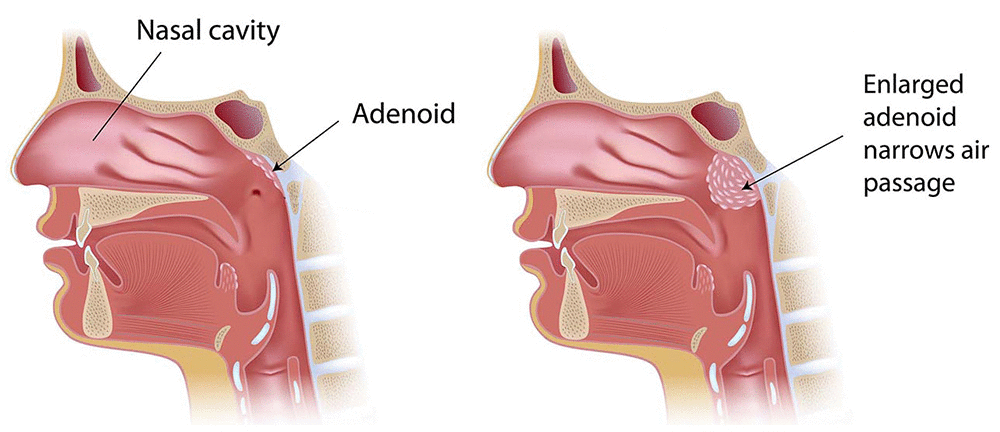
In children, enlarged adenoids are the most common cause of persistent blocked runny nose. Children safely undergo adenoid removal surgery as day case and there is no need to stay overnight in hospital in most cases. Adenoid surgery doesn’t really cause discomfort so the postop child is very well, eating and drinking happily. Many return to school 2-3 days later!
ENDOSCOPIC SINUS SURGERY AND NASAL POLYP REMOVAL
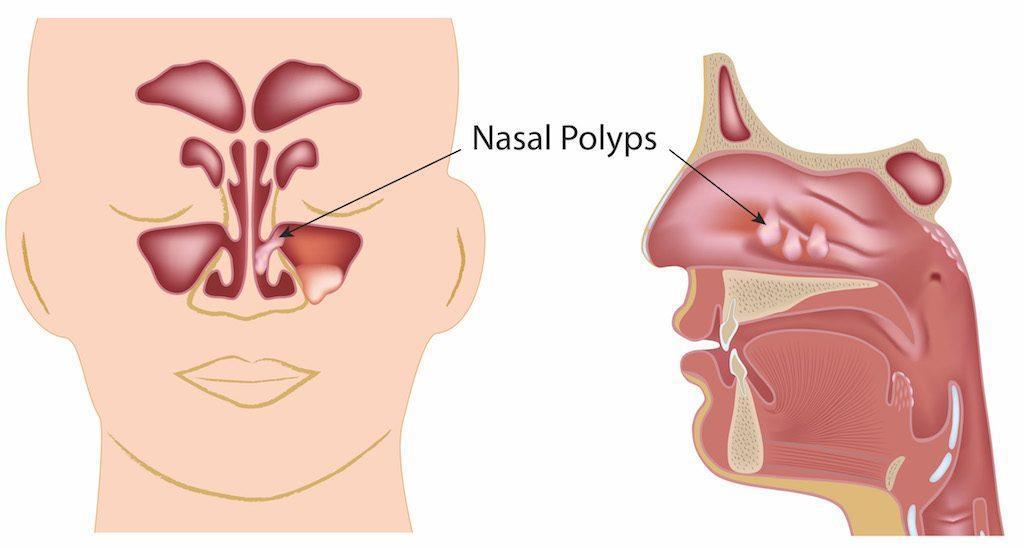
Sometimes, nasal polyps grow inside your nose to block off your nasal airways. We suspect the cause of nasal polyps to be severe allergies, resulting in thickening of the nasal lining to form benign growths called polyps.
Medications such as steroids can shrink the nasal polyps but they tend to recur. So then surgery plays a role to remove the nasal polyps to help you breathe better.
More recently, immunotherapy injections such as Dupixent are useful for treating very stubborn nasal polyps which keep growing back again and again. Dupixent is now used worldwide for patients who have already undergone multiple nasal polyp surgeries.
Conclusion
There you have it, everything you need to know about why you keep suffering from a blocked nose!
It is important to find out why first, before you consider the different treatment options for you or your child. Remember, it is abnormal and unhealthy not to be able to breathe through your nose! This in turn can affect your sleep quality and hence your daytime wellbeing.
