
Judge David Bell is a New Orleans–based executive and former chief judge of the Orleans Parish Juvenile Court with decades of leadership experience spanning law, public service, education, and healthcare administration. Today, Judge David Bell serves as chief executive officer of Personal Care Partners, LLC, where he oversees regional home care operations across the southeastern United States. His professional background includes managing complex organizations, evaluating risk, and guiding long-term value creation, skills that also translate to understanding how decisions affect asset worth over time.
Beyond healthcare leadership, Judge Bell previously operated a legal practice focused on criminal law, family law, and educational advocacy, and he has remained active in community-focused nonprofit initiatives for many years. His experience with oversight, compliance, and strategic decision-making provides a useful lens for examining how careful planning and attention to detail preserve value. These principles align closely with the topic of classic car restoration, where thoughtful choices and respect for authenticity often determine whether a vehicle’s value is enhanced or diminished.
Common Restoration Mistakes That Devalue Classic Cars
Restoring classic cars can be an extremely rewarding hobby. However, if not approached carefully, simple mistakes can significantly reduce the vehicle’s appeal and value. Standard restoration processes can boost a classic car’s worth, while poor restoration decisions or shortcuts can have the reverse effect, making that car harder to sell and less desirable to collectors. Regardless of the goal of the restorer, whether it is to compete in shows, enjoy the finished car, or maximize the resale value, it is best to avoid common pitfalls.
Ignoring originality and authenticity is a common mistake made by car restorers. This means failing to restore the car to its original specifications. Cars that retain their original parts, period-correct components, and factory finishes are significantly more desirable to collectors. When original parts are replaced with non-period, incorrect, or modernized features instead of classic ones, the car’s historical authenticity is compromised, reducing its market value and collector appeal. Well-intentioned upgrades, such as air conditioners or modern electronics like stereos, will lower its value if they deviate too far from what purists expect.
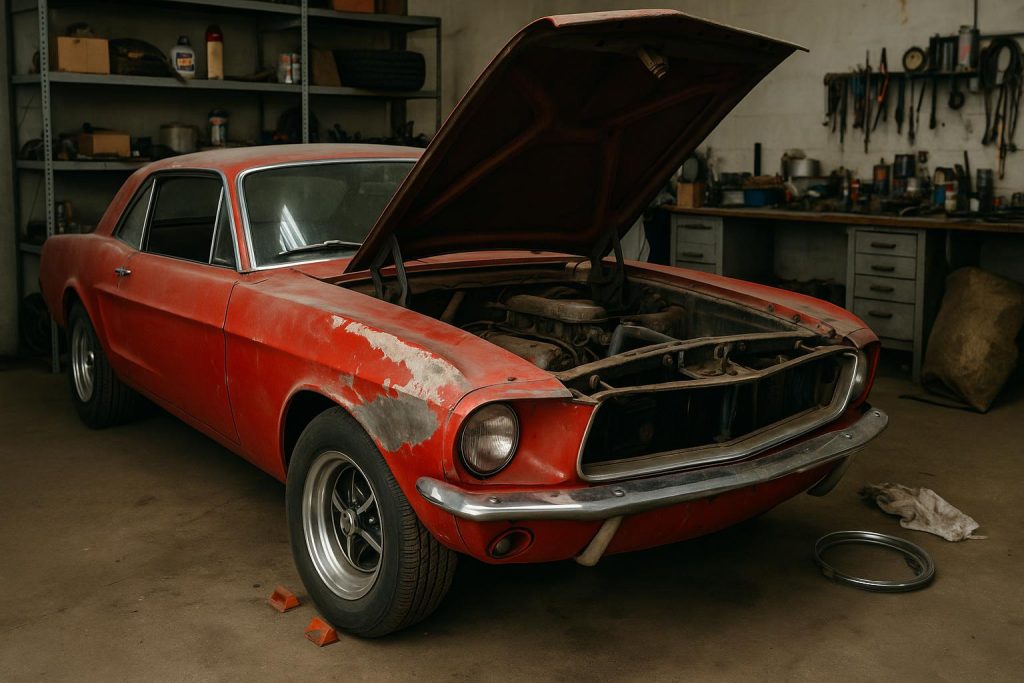
Cutting corners on metalwork and painting are other missteps that should be avoided. Rust and body damage are not uncommon in classic cars. Simply sanding surface rust and merely repainting it might initially seem harmless, however, it will not prevent further corrosion. It is best to engage in high-quality metal repair by cutting out all rusted panels and welding in new sheet metal. While this process is labor intensive and expensive, it provides long-lasting results. Opting for inferior bodywork adversely affects the car’s structural integrity and reduces its appeal to serious collectors.
Rushed or incomplete inspection before beginning restoration work can have serious negative implications. Structural damage, worn components, and hidden rust often do not become evident until the car is disassembled. Skipping the disassembly process as a restorer increases the risk of uncovering major issues midway through the restoration.
Further, using incorrect or low-quality parts can undermine an otherwise solid restoration. Brake components, wiring harnesses, trim pieces, and fasteners play critical roles in safety, durability, and authenticity. Generic or low quality parts often fit poorly, wear out faster, or fail under stress. Collectors and appraisers notice these details and consistently value cars higher when they use correct, authentic components.
Rushing a restoration almost always leads to regret. When builders skip planning, underestimate timelines, or push to finish a vehicle quickly, quality suffers. Careful restorations require time for proper disassembly, accurate parts sourcing, and precise restoration and reassembly. Patience allows problems to be addressed the first time, rather than covered up or postponed.
As mentioned, over-modifying a classic car can also reduce its value. While select upgrades may improve safety or reliability, excessive changes that alter the original styling or performance will turn many collectors away. Buyers tend to prefer cars that reflect their original era rather than modernized versions that have lost some of their historical character.
A successful restoration respects the car’s history while applying craftsmanship and thoughtful decision-making. By avoiding shortcuts, choosing the right parts, planning carefully, and preserving originality, restorers protect both the vehicle’s value and its legacy. Done well, a classic car restoration becomes not just a personal achievement but a lasting asset admired for years to come.
About Judge David Bell
Judge David Bell is a former chief judge of the Orleans Parish Juvenile Court and a longtime public servant with experience in law, education, and healthcare leadership. Based in New Orleans, he currently serves as chief executive officer of Personal Care Partners, LLC, overseeing regional home care operations. Judge Bell has also practiced law in criminal, family, and educational advocacy matters and remains active in nonprofit and community initiatives focused on youth development and social well-being.
