
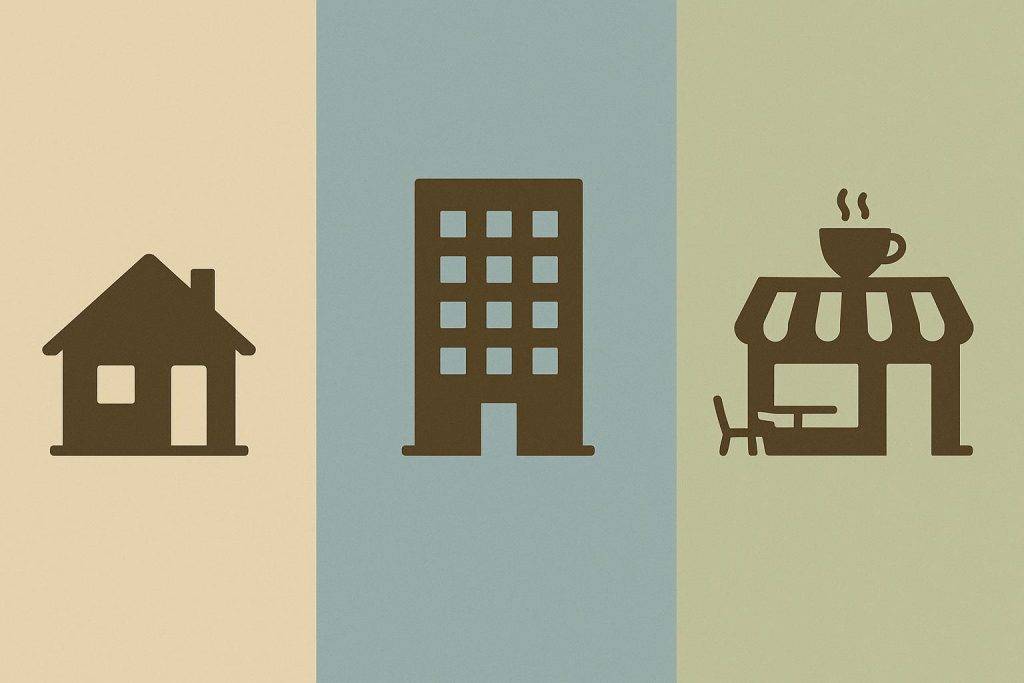
You may be asking: What exactly are your first, second, and third place? This is a concept created by the well-known urban sociologist Ray Oldenburg in his best-selling 1989 book called “The Great Good Place”. This theory is categorized into three unique realms, also known as ‘places’.
Contents
The First Place
The first place refers to your home. Your home is your safe, private, and comfortable place where you reside. This is the space to relax and enjoy individually, with a partner, or with family and friends alike. One example is when you settle into your Amberwood at Holland home.
The Second Place
The second place specifies your school or workspace area. Your school or workplace is a professional space where you spend a significant amount of time focusing on making a living and vital productivity.
The Third Place
The third place can be any informal public gathering place. These bridge the gap between your first and second places and help connect with a healthy democracy and society as a whole. Note that people have different definitions of a third place, but the core aspects of the third place include a strong sense of community and belonging to that specific place.
More About Third Places
Since third places have an array of meanings, there are many spaces that could be defined as a third place. Common examples may include:
- Bars, Pubs, and Diners
- Coffee Shops and Local Cafes
- Community Gardens and Public Parks
- Libraries, Bookstores, and Shared Spaces
- Barbershops/Salons, Churches, and Other Community Centres
Why do they matter
Oldenburg, his co-authors, and various others say that third places are the backbone of community interactions and social gatherings. Studies have shown that third places shape local identity, reduce loneliness, and provide an escape and unwind from various stressors.
