
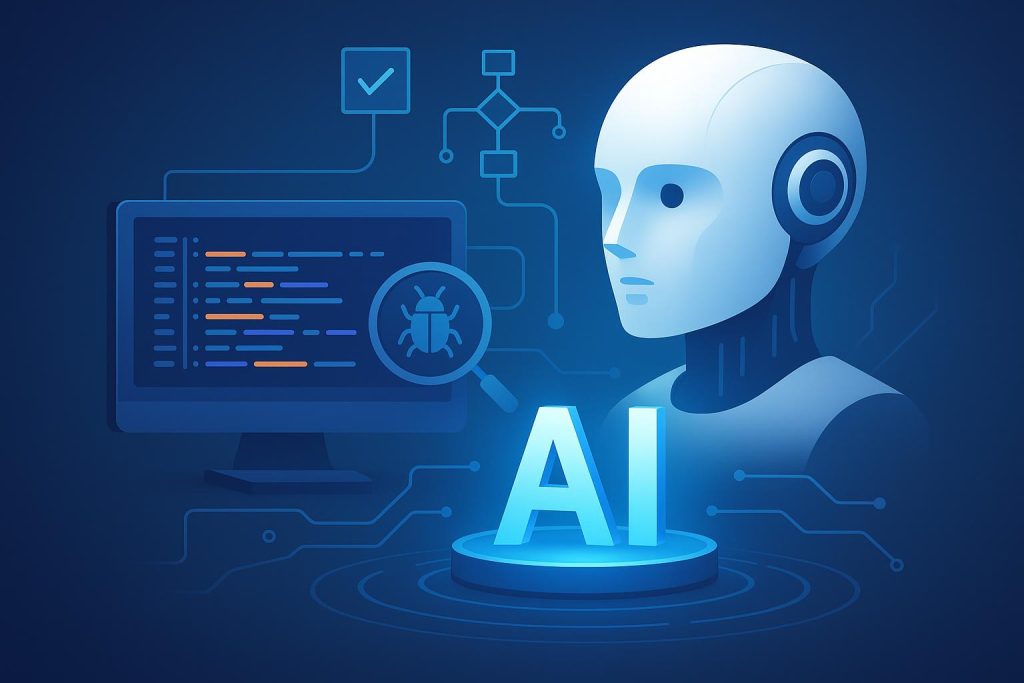
Artificial intelligence has already transformed many aspects of software development, and quality assurance (QA) is no exception. What began as simple automation scripts and rule-based testing frameworks is rapidly evolving into intelligent systems capable of analyzing requirements, generating test cases, identifying defects, and even assisting teams in making strategic testing decisions.
As organizations continue to accelerate software delivery, AI-powered testing is becoming a critical component of modern QA strategies. The future of software testing is not about replacing testers. Instead, it is about augmenting human expertise with intelligent tools that improve speed, accuracy, and efficiency.
In this article, we’ll explore the emerging trends shaping the future of AI-powered software testing and what QA professionals can expect in the years ahead.
The Evolution of AI in Software Testing
Traditional test automation significantly reduced manual effort, but it often required extensive maintenance and technical expertise. AI-powered testing platforms have introduced a new level of intelligence by enabling systems to adapt to application changes, generate test scenarios automatically, and detect patterns that human testers might miss.
Today, AI is being used for:
Automated test case generation
Visual validation and UI testing
Defect prediction
Root cause analysis
Intelligent test maintenance
Risk-based test prioritization
As machine learning models become more sophisticated, these capabilities will continue to expand, allowing QA teams to focus more on strategic testing activities rather than repetitive tasks.
AI Copilots and Virtual QA Assistants
One of the most significant trends in software testing is the rise of AI copilots and virtual QA assistants. These tools act as intelligent partners for testers, helping them create test cases, analyze requirements, generate automation scripts, and troubleshoot failures.
Modern large language models are enabling QA professionals to interact with testing tools using natural language. Instead of writing complex scripts manually, testers can describe a scenario and receive automated test recommendations, code snippets, or debugging suggestions.
Many organizations are already exploring how AI assistants in software testing can accelerate workflows and reduce the learning curve for new team members. Solutions built on advanced language models are becoming valuable resources for both manual and automation testers.
For teams interested in practical applications, this guide on Claude for modern QA teams explores real-world use cases, strengths, and limitations of AI-powered assistants in testing environments.
As these assistants become more specialized, they may evolve into dedicated QA agents capable of handling entire testing workflows with minimal human intervention.
Self-Healing Test Automation Will Become Standard
One of the biggest challenges in automated testing is maintaining test scripts as applications evolve. Minor UI changes can break dozens of tests, creating maintenance overhead that slows development teams.
AI-powered self-healing automation addresses this issue by automatically adapting to changes in user interfaces, locators, and workflows. Rather than failing immediately when an element changes, intelligent systems can identify alternative matches and continue execution.
In the future, self-healing capabilities are expected to become a standard feature across testing platforms. This will significantly reduce maintenance costs and improve test reliability.
Predictive Quality Analytics
Software testing is becoming increasingly data-driven. AI systems can analyze historical test results, code changes, production incidents, and user behavior to predict where defects are most likely to occur.
Predictive quality analytics will allow organizations to:
Prioritize testing efforts more effectively
Allocate resources based on risk
Detect quality issues earlier in the development cycle
Improve release confidence
Rather than treating every feature equally, QA teams will focus on the areas that present the greatest business and technical risk.
Autonomous Test Generation
Creating comprehensive test coverage remains a time-consuming task for many teams. Future AI-powered platforms will increasingly generate tests automatically by analyzing:
User stories
Requirements documents
Application behavior
User interaction patterns
Existing test repositories
These systems will identify coverage gaps and recommend additional scenarios without requiring extensive manual input.
While human oversight will remain essential, autonomous test generation has the potential to dramatically accelerate test creation and improve overall coverage.
Enhanced Visual and User Experience Testing
User experience plays a crucial role in software success, and visual testing is becoming more important than ever.
AI-driven visual testing tools can detect subtle UI differences that traditional automation often misses. Beyond simple pixel comparisons, future systems will evaluate interfaces similarly to how humans perceive them.
Advanced visual testing may soon be capable of identifying:
Accessibility concerns
Design inconsistencies
Usability issues
Responsive layout problems
Branding violations
This shift will help teams deliver more polished and user-friendly applications.
AI-Driven Security and Performance Testing
Security and performance testing are also benefiting from AI advancements.
Machine learning models can identify unusual application behavior, detect vulnerabilities, and simulate sophisticated attack patterns. AI can also analyze performance bottlenecks by evaluating system telemetry, logs, and infrastructure metrics.
Future testing ecosystems will increasingly combine functional, security, and performance testing into unified AI-powered quality platforms.
This integrated approach will provide organizations with a more complete understanding of application health and risk.
Human Testers Will Become Strategic Quality Experts
Despite concerns about automation replacing jobs, the future of QA is likely to involve greater collaboration between humans and AI.
As routine tasks become automated, testers will spend more time on activities that require human judgment, including:
Exploratory testing
Risk assessment
User experience evaluation
Business validation
Test strategy development
The role of the tester will continue evolving from execution-focused work toward quality leadership and decision-making.
Organizations that successfully combine human expertise with AI-powered tools will likely achieve the highest levels of software quality.
Preparing for the Future of AI-Powered Testing
To stay competitive, QA professionals should begin developing skills that complement AI
technologies rather than compete with them. Areas worth focusing on include:
Test strategy and planning
Prompt engineering for AI tools
Data analysis
Risk-based testing
AI governance and ethics
Cross-functional collaboration
The most successful testers of the future will be those who understand both software quality principles and the capabilities of emerging AI systems.
Conclusion
AI-powered software testing is entering a new era. From intelligent QA assistants and self-healing automation to predictive analytics and autonomous test generation, AI is reshaping how organizations approach software quality.
While many of these technologies are still evolving, the overall direction is clear: testing will become more intelligent, proactive, and integrated throughout the software development lifecycle. Human testers will remain essential, but their role will increasingly focus on strategy, critical thinking, and quality leadership.
For professionals who want to stay ahead of emerging AI trends, it is valuable to look beyond software testing alone. Resources such as NeuroBits AI provide insights into how artificial intelligence is transforming industries, workflows, and business functions far beyond QA, helping technology professionals understand the broader impact of AI innovation.
